




Hyperlocal Work Guide • Durham, NC
Why the 2026 RAM 1500 Is the Work Truck for RTP Corridor Contractors
The Research Triangle generates more construction activity per square mile than almost any metro in the Southeast. The truck that handles it best isn't the one with the biggest ad budget.
420 hp
Hurricane I-6 standard engine
12,750 lb
max tow (RHO configuration)
2,300 lb
max payload capacity
469 lb-ft
torque — Hurricane SO
In This Guide
- Why RTP Contractors Need a Truck That Thinks Like They Do
- The Suspension Difference: Coil Springs While Everyone Else Uses Leaf
- 420 HP Hurricane Engine: Power That Earns Its Keep on I-40
- Payload and Tow: Numbers That Actually Move Triangle Materials
- The Cab Is a Mobile Office — RAM's Interior Tech Advantage
- RAM Box and Bed Storage: Tools Secure, Site to Site
- Which RAM 1500 Trim for a Triangle Contractor?
Section 1 of 7
Why RTP Corridor Contractors Need a Truck That Thinks Like They Do
Research Triangle Park is a 7,000-acre science and technology campus straddling Durham, Wake, and Orange Counties. It is not slowing down. Pharmaceutical campuses are expanding on I-40 West of Morrisville. Data center construction is ongoing east of RTP along NC-55. Life sciences facilities are going up on the edges of Chapel Hill. Meanwhile, the residential buildout in Chatham County, Cary's western expansion corridors, and the Wake County infill are generating constant demand for contractors hauling materials between suppliers on I-85 North, job sites on US-15-501 South, and supply yards in Mebane and Burlington.
The truck that serves that contractor profile well has to do four things without compromise:
- Ride smoothly on an I-40 slab that's been patched more times than a tire
- Tow equipment trailers, materials loads, and machinery between scattered Triangle sites
- Work as a mobile office for calls, site documents, and dispatch software during drive time
- Keep tools and equipment secure between site stops without a full-size trailer
The 2026 RAM 1500 is the only half-ton pickup that handles all four of those things better than its competition — and it does it across a trim range that starts under $40,000 for a pure work spec and tops out at a luxury cabin that puts most sedans to shame for the contractor who drives from jobsite to client meeting on the same day.
Back to top ↑Section 2 of 7
The Suspension Difference: Coil Springs While Everyone Else Uses Leaf
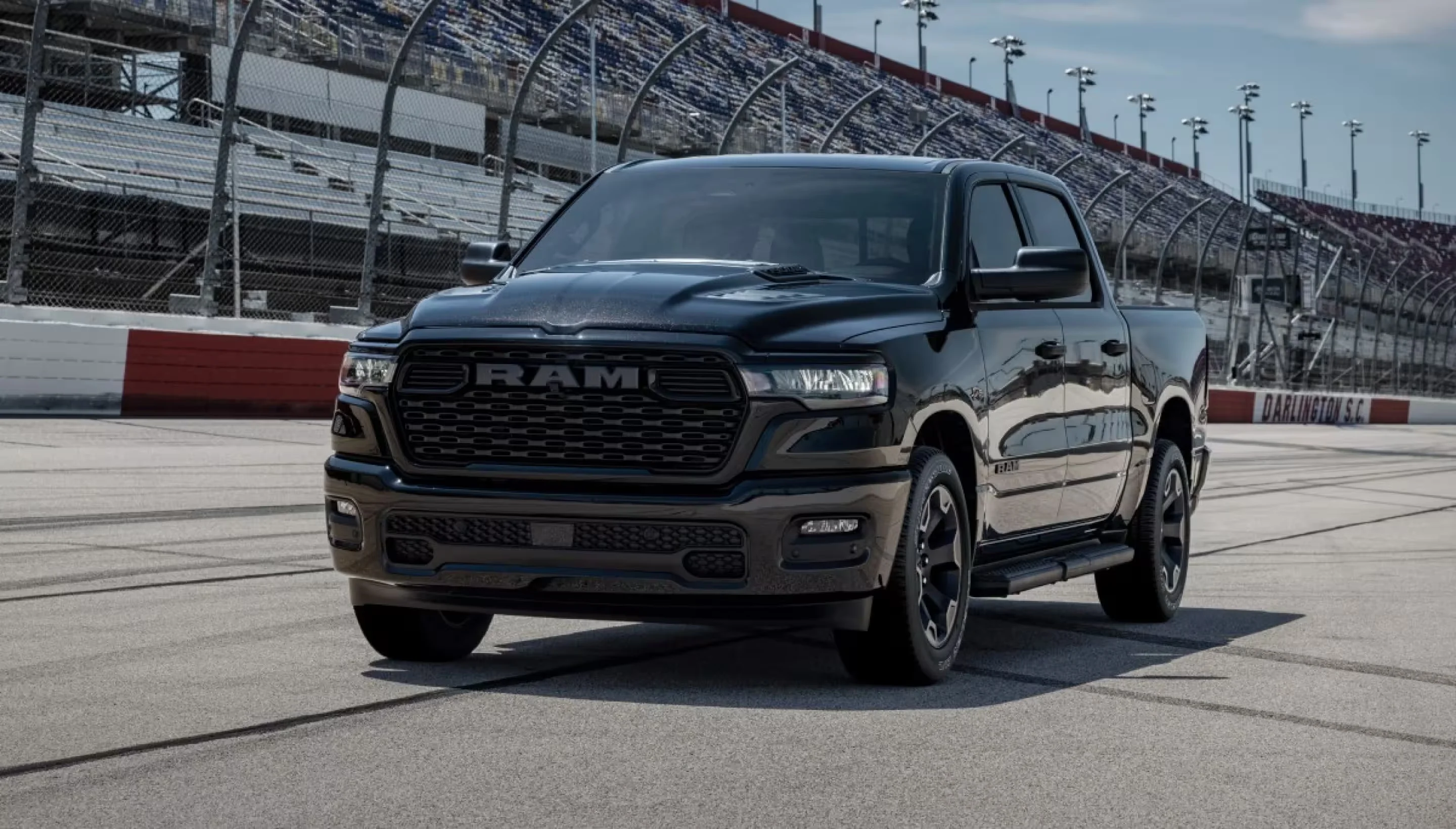
RAM's coil-spring rear suspension is standard across the lineup — no other half-ton offers this.
Every other half-ton pickup on sale right now uses a leaf-spring rear suspension. Leaf springs are strong and cheap to manufacture, which is why they've been the default in pickup trucks for over a century. They're also stiff, and on a patched I-40 or a construction site access road with speed bumps, you feel every single joint in the pavement through the cab.
The 2026 RAM 1500 uses a coil-spring rear suspension as standard equipment. Not an air suspension upgrade, not a limited-run off-road package — coil springs across the entire lineup, from the Tradesman work spec to the Tungsten luxury flagship. This is a structural difference. Coil springs allow more independent wheel travel, absorb small impacts before they reach the frame, and provide a consistently smoother ride on both highway slabs and broken secondary roads.
For a Triangle contractor logging 25,000+ miles annually on I-40, US-15-501, and Chatham County backroads, the suspension difference is felt every single day.
The practical result for an RTP contractor: the RAM 1500 arrives at a site feeling like you've been driving, not working. The F-150 and Silverado, both running leaf springs in the rear, transmit significantly more road harshness — noticeable immediately on NC-147 expansion joints between Durham and RTP, and on the county road segments that service industrial sites in northern Wake County.
Available upgrades go further: the optional Coil-Air adaptive suspension (standard on RHO) adds load-leveling and adjustable ride height. For contractors hauling variable loads — heavy materials to a site, empty on the return — this keeps the truck's handling consistent regardless of whether the bed is loaded or empty.
Back to top ↑Section 3 of 7
420 HP Hurricane Engine: Power That Earns Its Keep on I-40
Starting with the Warlock trim and above, the 2026 RAM 1500 comes standard with the 3.0L Hurricane twin-turbocharged inline-6 in Standard Output configuration: 420 horsepower and 469 lb-ft of torque. This engine is not borrowed from a car platform. RAM built it specifically for trucks — a turbocharged architecture tuned for low-end torque delivery rather than peak RPM horsepower, which matters more for loaded starts from construction site entrances, on-ramp merges with a full bed, and sustained mountain grades on US-70 West when supplies are coming from Asheville.
For comparison:
| Truck | Standard Engine | HP | Torque | Max Tow |
|---|---|---|---|---|
| 2026 RAM 1500 (Warlock+) | 3.0L Hurricane I-6 | 420 hp | 469 lb-ft | 12,700 lb |
| 2026 Ford F-150 (standard) | 2.7L EcoBoost V6 | 325 hp | 400 lb-ft | 7,700 lb |
| 2026 Chevrolet Silverado (standard) | 2.7L Turbo 4-cyl | 310 hp | 430 lb-ft | 9,500 lb |
| 2026 Toyota Tundra (standard) | 3.5L Twin-Turbo V6 | 389 hp | 479 lb-ft | 12,000 lb |
Competitor specs from manufacturer-stated ratings. Verify before comparison purchase. Standard engine = lowest available engine for each model at mid-range trims.
The 95-horsepower gap between the Hurricane SO and the F-150's base EcoBoost isn't a bragging-rights stat — it's a difference you feel when you're loaded to the max on a ramp from I-40 East onto I-85 North with a concrete mixer trailer. The Silverado's 2.7L four-cylinder is a displacement mismatch for the job. The RAM's Hurricane SO gives you a powertrain that was sized for the load, not downsized to hit a fuel economy number.
Back to top ↑Section 4 of 7
Payload and Tow: Numbers That Actually Move Triangle Materials
Construction materials move between a lot of points in the Triangle. Lumber from the Mebane Home Depot on I-40/I-85. Stone from quarry operations on US-64 out toward Pittsboro. Equipment from rental yards in Durham and Raleigh. The contractors doing this kind of hauling are not pulling empty trailers — they're moving payload numbers that expose the difference between a truck that can handle it and one that's been oversold.
The 2026 RAM 1500 is rated for up to 2,300 lb of payload in its heaviest-rated configuration (Tradesman or Big Horn with the right axle/package). That covers most contractor in-bed loads: a pallet of bagged concrete (80 bags × 60 lb = 4,800 lb requires a trailer; ~20 bags at 1,200 lb fits in bed), full tool kit plus two crew members, or bulk roofing materials for a single residential job.
For trailer work, the Hurricane SO engine enables up to 12,700 lb maximum tow — more than enough for a standard construction equipment trailer, a mini-excavator, a Bobcat skid steer, or a full load of lumber on a tandem trailer. The RAM's available integrated trailer brake controller, 360° trailer camera system, and active trailer sway control make loading and backing into tight site entrances off US-15-501 or inside the RTP campus far less of a production than a basic seven-pin hookup.
The RAM's 12,700 lb tow ceiling is the difference between one trip and two. For a contractor on hourly billing or a tight delivery window, that's money.
Section 5 of 7
The Cab Is a Mobile Office — RAM's Interior Tech Advantage
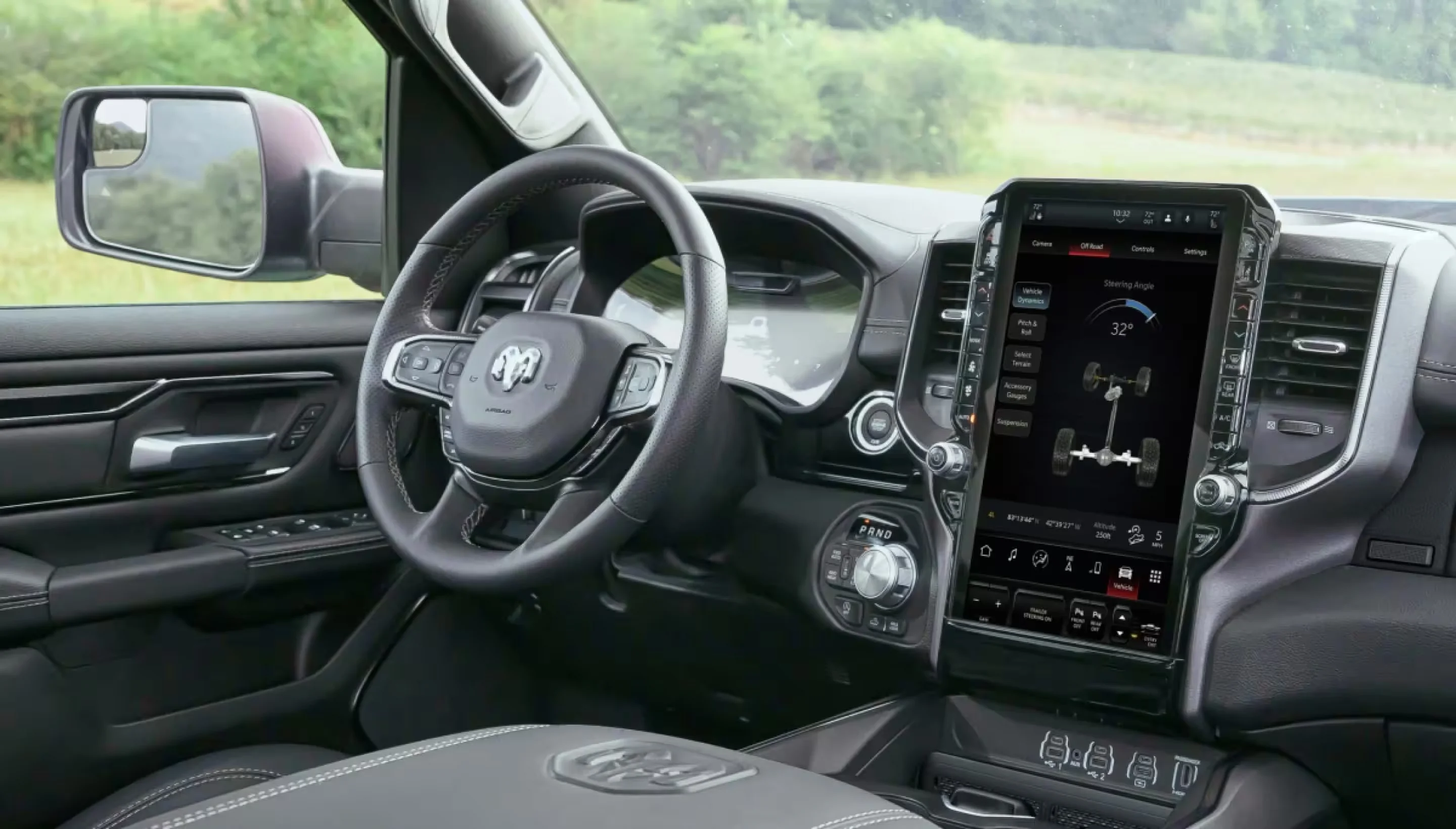
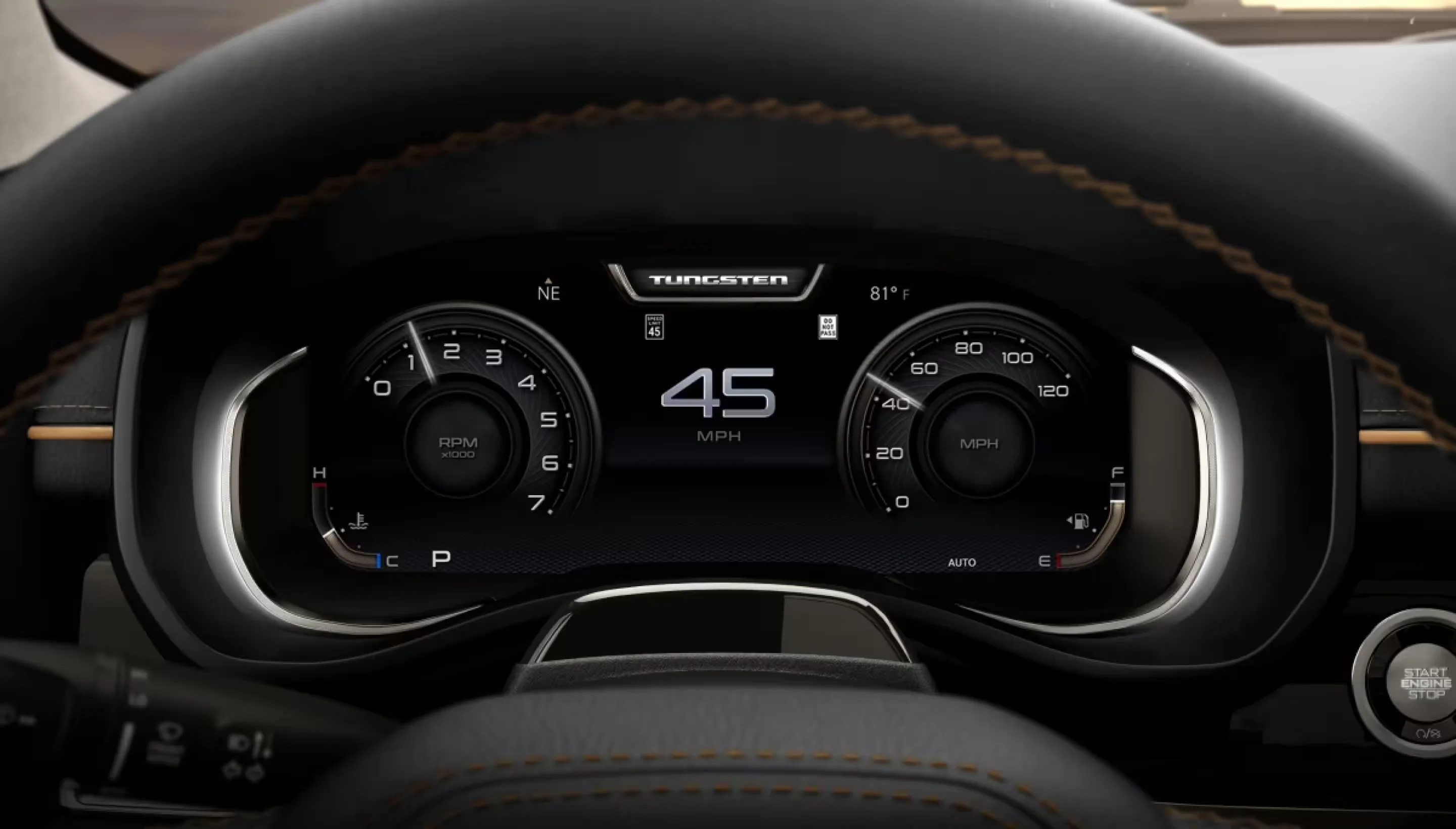
An RTP contractor who runs crews on two or three Triangle sites simultaneously doesn't stop working when they get in the truck. Calls with GCs. Dispatch check-ins. Change order emails. Jobsite photos uploaded to project management software. All of this happens behind the wheel of whatever they're driving — so the cab matters more than the bed for a lot of working days.
The 2026 RAM 1500 is the quietest cab in the half-ton segment. RAM uses acoustic laminated glass, thicker door seals, and an active noise cancellation system (on upper trims) to reduce road and engine noise. The result: at 70 mph on I-40, the cab is noticeably quieter than the F-150 or Silverado at equivalent specifications. That's not a comfort preference; it's a functional advantage for hands-free calling and Bluetooth audio without shouting.
Technology specifics for contractors:
- 12″ Uconnect 5 touchscreen (standard from Warlock up) — navigation, Apple CarPlay/Android Auto, and OEM software with wireless connectivity. The screen runs real-time traffic routing, which matters on an I-40 corridor that has construction delays of its own every third morning.
- Multiple USB-C charging ports front and rear — keep phones, tablets, and site measurement tools charged through a full workday without a car charger cube.
- Adaptive Cruise Control with stop-and-go (standard from Laramie, available earlier) — the I-40 West construction slowdown between Durham and Cary is effectively handled on autopilot, reducing driver fatigue on the commute segment that follows a full site day.
- Digital instrument cluster (standard from Warlock) — configurable to show tow/payload data, tire pressure per wheel, and trip data that matters for mileage reimbursement tracking.
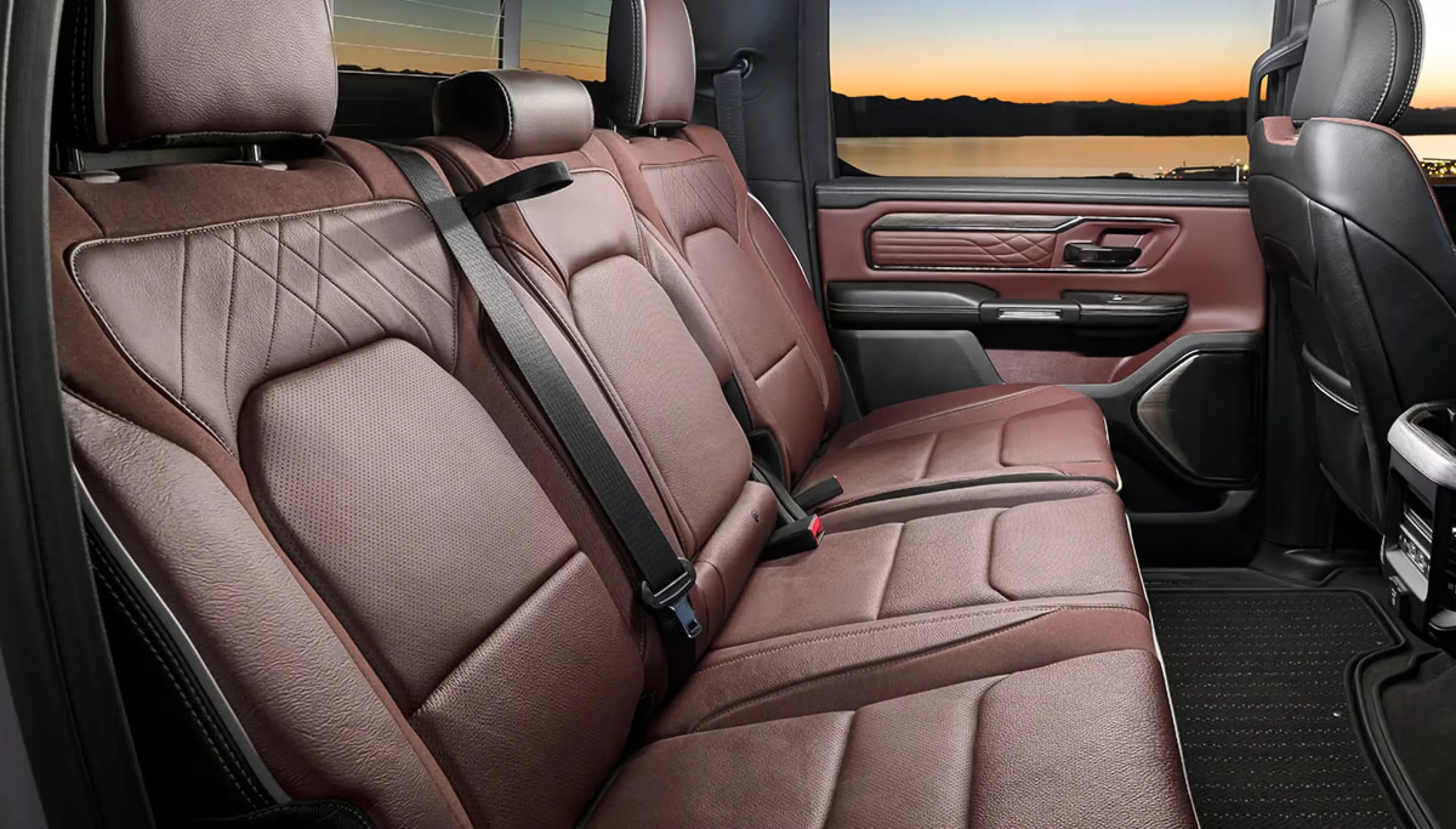
The crew cab rear seat carries three adults without the middle-seat penalty common in the F-150.
Back to top ↑Section 6 of 7
RAM Box and Bed Storage: Tools Secure, Site to Site
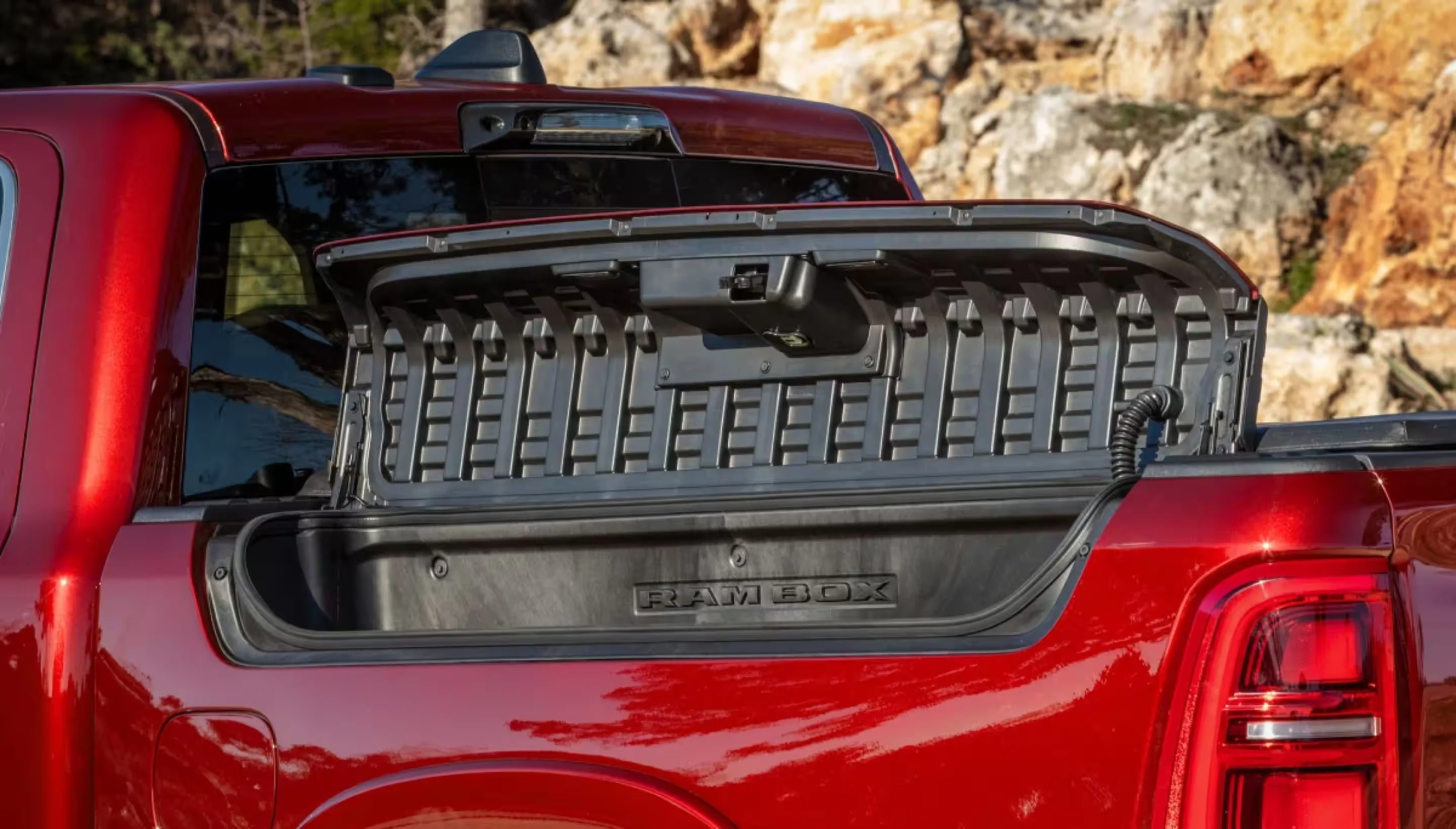
RAM Box: lockable, weatherproof in-bed storage integrated into the truck's bed rails.
The RAM Box is an optional ($650–$900 depending on configuration) integrated in-bed cargo management system: two lockable, weatherproof compartments built into the inner bed walls, each large enough to hold tool bags, cords, and smaller equipment out of sight and out of the weather. It's not a bed extender. It's not a bolt-on toolbox that eats bed length. RAM Box sits within the factory bed profile and keeps usable flat bed space uncompromised.
For an RTP contractor who parks a crew cab overnight at a job site, or leaves tools in the bed between site visits, RAM Box reduces theft exposure without requiring a full tonneau cover or a contractor-grade locking toolbox. The compartments drain when it rains and resist the Carolina humidity that rusts exposed metal tools through a single season.
Combined with the RAM 1500's available multifunction tailgate (with a split-folding gate section), bed lighting, and bed liner, the truck's cargo management system is more thoughtfully designed than anything the F-150 or Silverado offers at equivalent trim levels.
Back to top ↑Section 7 of 7
Which RAM 1500 Trim for a Triangle Contractor?
The honest answer depends on how the truck earns its keep during the week and what the driver needs to get out of it on weekends.
For Pure Work
Tradesman / Big Horn
From ~$37,000–$42,000
V6 eTorque engine, max payload, no frills. Correct for contractors who want the RAM frame and ride quality at the lowest entry cost. Upgrade to Big Horn for body-color bumpers and the 12″ screen option.
Recommended for Most
Warlock or Laramie
From ~$52,000–$56,000
The Hurricane SO engine standard means 12,700 lb tow and full cab tech (12″ screen, wireless CarPlay, digital cluster). Warlock for the blacked-out appearance; Laramie if you go from site to client meetings in the same truck and need leather. The RTP contractor sweet spot.
For Owner-Operators
Limited or Tungsten
From ~$62,000–$73,000
Business owners who meet with GCs, developers, and architects in the same truck they haul materials in need the Limited's ventilated seats, 360° camera, and acoustic cab. The Tungsten is full excess — panoramic roof, massaging seats — for when the truck is also a luxury purchase.
Sport Durst CDJR is on Durham-Chapel Hill Blvd — easy access from RTP via I-40 or NC-147. Browse current RAM 1500 inventory or call (919) 873-4578 to confirm which trims and configurations are in stock today.
Back to top ↑See the 2026 RAM 1500 at Sport Durst CDJR
4511 Durham-Chapel Hill Blvd • Durham, NC • 20 minutes from RTP via I-40 or NC-147
RAM 1500 for Contractors — FAQ
Why does RAM use coil springs instead of leaf springs in the rear?
RAM switched to a coil-spring rear suspension design because coils allow more independent wheel travel, absorb road impacts more progressively, and deliver a smoother ride than leaf springs — particularly on patched highway surfaces like I-40 between Durham and RTP. The tradeoff is that coil springs require more complex engineering to achieve the same load ratings as leaf springs, which is why other manufacturers defaulted to leaf. RAM chose to engineer around the challenge. The result is a half-ton pickup that rides noticeably smoother than the F-150 and Silverado across all load conditions.
What is the maximum payload of the 2026 RAM 1500?
The 2026 RAM 1500 has a maximum payload rating of approximately 2,300 lb in its highest-rated configuration. Actual payload varies significantly by trim, cab configuration, axle ratio, and options. Always verify the specific payload rating for the configured vehicle you're purchasing — the payload sticker on the door jamb is the authoritative number for that specific truck.
Does the 2026 RAM 1500 have fleet pricing for RTP contractors?
Yes. Sport Durst CDJR offers fleet pricing for RAM 1500 and other CDJR vehicles for qualifying businesses, contractors, and commercial buyers. Contact the fleet team at (919) 808-4529 to discuss pricing, volume ordering, and upfitting options for work truck configurations.
How does the RAM 1500 Hurricane engine compare to the Ford F-150 EcoBoost?
The RAM 1500's 3.0L Hurricane Standard Output produces 420 hp and 469 lb-ft of torque. The F-150's base 2.7L EcoBoost produces 325 hp and 400 lb-ft. The Hurricane SO delivers a 95 hp and 69 lb-ft advantage over the F-150's standard engine, enabling a significantly higher tow rating (12,700 lb vs approximately 7,700 lb on the base EcoBoost configuration). For a contractor with real tow demands, the engine comparison alone is a material difference.
Where can I buy a 2026 RAM 1500 near RTP, NC?
Sport Durst Chrysler Jeep Dodge RAM is at 4511 Durham-Chapel Hill Blvd, Durham, NC — approximately 20 minutes from most RTP addresses via I-40 East. View current RAM 1500 inventory online or call (919) 873-4578 to confirm trim availability and schedule a test drive.
Sport Durst CDJR
Durham, NC
4511 Durham-Chapel Hill Blvd
Durham, NC 27707
~20 min from RTP via I-40 or NC-147
www.sportdurstchryslerjeepdodge.com
Mon – Sat9:00 AM – 8:00 PM
Sunday12:00 PM – 6:00 PM
All RAM 1500 engine output, tow, and payload figures are manufacturer-stated for MY2026 and vary by configuration. Competitor figures sourced from manufacturer-published specifications; verify before purchase decisions. Ram Box pricing is approximate. Sport Durst CDJR, 4511 Durham-Chapel Hill Blvd, Durham, NC 27707 — (919) 873-4578.